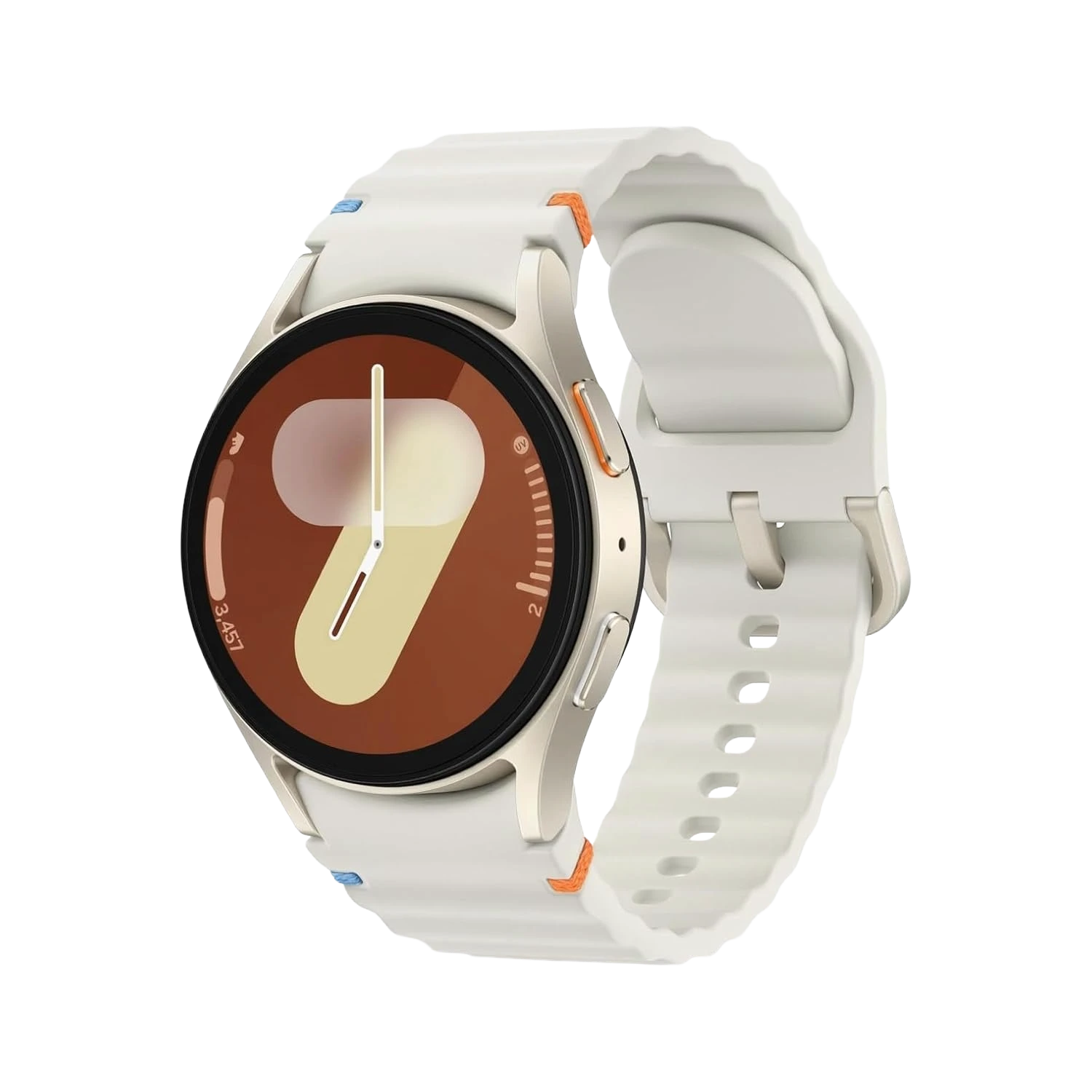
Most people buy a smartwatch, wear it enthusiastically for three weeks, and then inevitably leave it sitting dead in a desk drawer because the battery died and charging it started to feel like a daily chore. It is the graveyard of good intentions. The Samsung Galaxy Watch 7 actively fights that fade with a brilliant, always-readable screen, incredibly snappy performance, and health tracking detailed enough that you actually want to check it in the morning. Better yet, since it routinely drops under the $200 mark these days, it has transitioned from a luxury impulse buy into one of the most practical tech upgrades you can make.
The Samsung Galaxy Watch 7, Explained
The Galaxy Watch 7 is Samsung's mainstream, do-everything smartwatch. It runs Google’s Wear OS 5 with Samsung’s One UI 6 layered on top, meaning you get the best of Google’s app ecosystem (like Google Maps and Google Wallet) cleanly integrated with Samsung’s health software.
The real star of the show under the hood is the 3nm Exynos W1000 chip. That processor is tiny, highly efficient, and paired with 2GB of RAM. In practical terms, it means apps open instantaneously and the watch absolutely refuses to lag or stutter when you're swiping through notification screens on a run. You also get 32GB of onboard storage—double what the previous generation offered—so you have plenty of room to download Spotify playlists directly to the watch for phone-free workouts.
Available in 40mm and 44mm sizes, the Super AMOLED display (1.3-inch and 1.5-inch respectively) peaks at a blinding 2,000 nits of brightness. Covered in scratch-resistant sapphire crystal, the screen remains incredibly sharp and perfectly readable even when you are staring at it under harsh, direct afternoon sunlight.

The health story, however, is the real draw. Samsung upgraded its BioActive sensor array on the back with 13 LEDs to pull significantly more accurate heart rate and blood oxygen data. The standout feature is its FDA-authorized sleep apnea detection, which can flag signs of moderate to severe sleep apnea overnight—a capability that used to require a clunky, specialized medical device. It also introduces an AGEs (advanced glycation end-products) index that gives you a snapshot of your metabolic health based on your diet and lifestyle.
For outdoor athletes, the watch finally packs dual-frequency (L1+L5) GPS. Older single-band watches notoriously struggle in dense cities or heavy tree cover, drawing jagged lines through city blocks. The dual-frequency upgrade pinpoints your route on a run with massive accuracy, ensuring your pacing and distance metrics are actually correct.
Who Should Buy the Samsung Galaxy Watch 7?
This watch is precision-built for Android users, and specifically Samsung Galaxy phone owners, who want top-tier, flagship-level smartwatch features without paying $300 to $400 for a "Pro" or "Ultra" model. The pairing between a Samsung phone and this watch is airtight, and all your health data flows into the Samsung Health app automatically and seamlessly.
It is also the perfect fit for everyday fitness folks who run, cycle, walk, or simply want vastly better insights into how they recover. The dual-frequency GPS makes outdoor pacing reliable, and the sleep tracking—which factors in heart rate, skin temperature, snoring, and that crucial apnea flag—gives you a concrete "Energy Score" in the morning. It tells you whether you should push hard at the gym or take a rest day.

If you carry an iPhone, though, skip this immediately. Wear OS 5 explicitly requires an Android phone to function, and you won't even be able to get past the setup screen with an Apple device.
Key Features
- Sleep apnea detection flags overnight breathing issues worth discussing with a doctor
- Dual-frequency GPS maps your runs accurately, even between tall city buildings
- 1.5-inch Super AMOLED stays sharp and readable in direct sunlight
- 3nm Exynos W1000 chip keeps apps quick and swiping smooth
- Energy Score and wellness tips turn your sleep and activity into plain advice
One Thing to Consider: The Battery Reality
Let's talk about the elephant in the room: battery life. With the 40mm model packing a 300mAh battery and the 44mm holding a 425mAh battery, you are looking at roughly a day to a day and a half of normal use.
If you want a rugged smartwatch that you only have to charge once a week, this is absolutely not it. If you activate the always-on display, use the GPS for a long run, and track your sleep, you will be draining it faster. You will need to charge this watch almost every day, so your best bet is to build a quick 30-to-45-minute charging top-up into your daily routine—like while you shower and get ready for work.
Frequently Asked Questions
Q: Does the Galaxy Watch 7 work with an iPhone? No. The Galaxy Watch 7 runs Wear OS and needs an Android phone to set up and use, with the best experience on a Samsung Galaxy phone. iPhone users should look at the Apple Watch instead, since core features won't work without Android.

Q: Is the sleep apnea detection accurate? It's a screening tool, not a diagnosis. The watch looks for breathing disruptions overnight and flags possible signs of sleep apnea, which is genuinely useful as an early warning. If it flags something, treat that as a reason to see a doctor, not a final answer.
Q: How long does the battery last? Plan on about a day to a day and a half of normal use, less if you keep the always-on display active or track long GPS workouts. It charges quickly, so a short top-up while you shower gets you through the day.
Verdict
The Samsung Galaxy Watch 7 manages to deliver flagship-tier health tracking, incredibly snappy performance, and a gorgeously bright AMOLED screen for well under $200. That combination makes it arguably one of the absolute best Android smartwatch values on the market right now. Buy it without hesitation if you carry an Android phone, but skip it entirely if you are locked into the iPhone ecosystem or if you demand a battery that lasts multiple days on a single charge.